
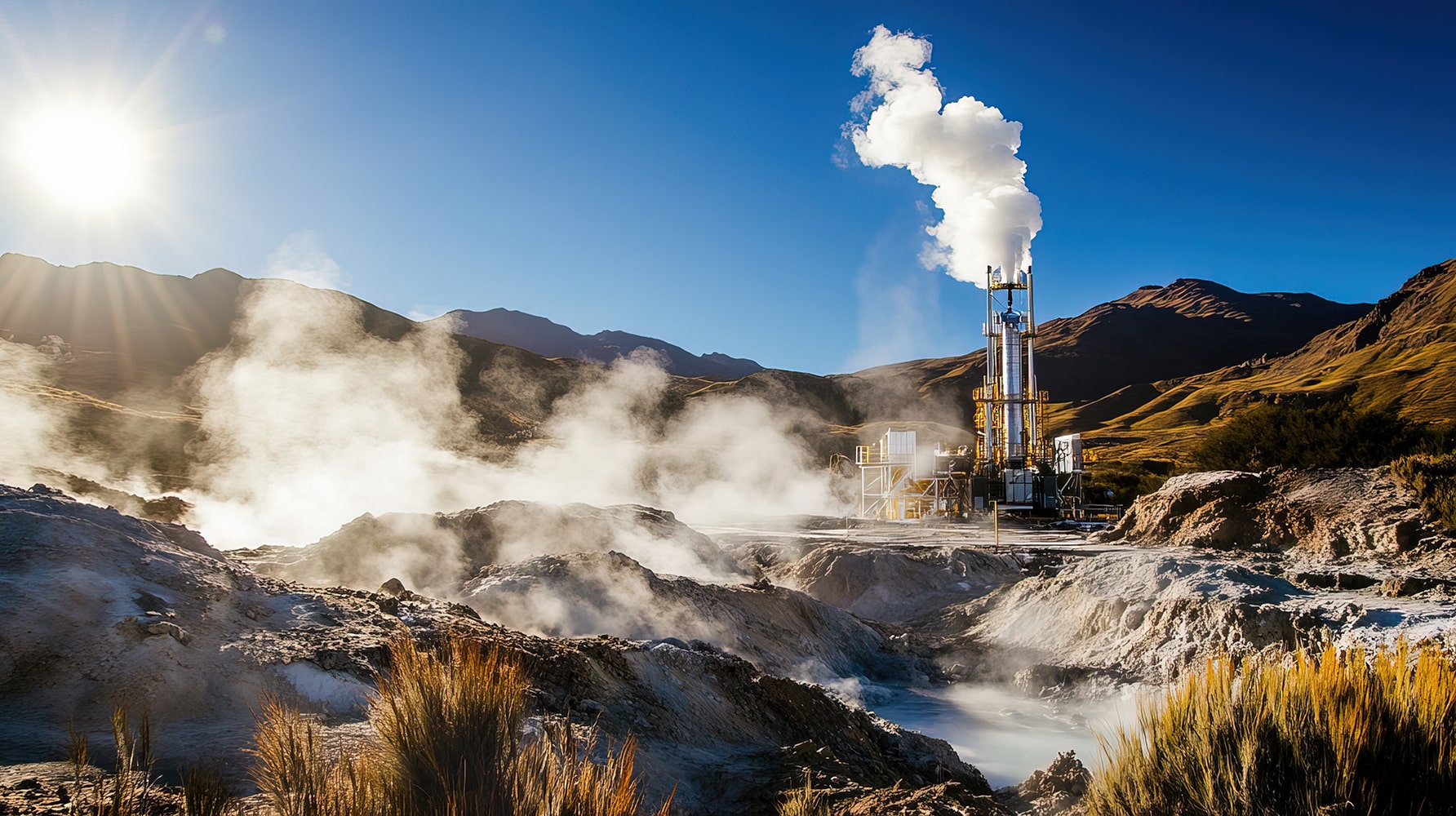
Geothermal energy taps into a colossal reservoir of heat beneath our feet. But how much energy lies within the UK’s depths, and how technically and economically feasible is it to extract? This article outlines the scale of the UK’s geothermal heat resource and explains why it’s a strategic opportunity for long-term, low-carbon energy.
The Scale of UK Geothermal Heat
Estimates indicate that the UK has access to an almost unimaginably large volume of subsurface heat. A technical briefing from the British Geological Survey states that UK geothermal heat potential amounts to 328×10¹⁸ joules, equivalent to about 100 years of the UK’s current heat demand
To put that in context: this supply of heat, if harnessed, could meet the nation’s heating needs for a century without requiring imports—a significant platform for energy security.
Another independent assessment, conducted by the Durham Energy Institute, corroborates this magnitude, confirming that deep geothermal resources could, in principle, supply all of the UK’s heat demand for at least 100 years
Geology and Heat Availability
Geothermal energy isn’t evenly spread underground—its availability depends on depth and subsurface temperature. In the UK, average subsurface temperatures are approximately 40 °C at 1 km, 90 °C at 3 km, and 140 °C at 5 km
These temperatures are ideal for heat generation (direct use), as opposed to electricity production, which requires much higher temperatures. The rate at which temperature increases with depth “the geothermal gradient” averages 30°C per kilometre in the UK. This gradient provides predictable thermal conditions for planning.
Practical Resource Estimates by Region
Geological analyses of deep aquifer systems provide localized estimates of accessible heat. For example:
- East Yorkshire & Lincolnshire (Sherwood Sandstone): Resource estimated at 6.7 exajoules.
- Wessex Basin (Sherwood Sandstone): Identified resource of 22.9 exajoules between 1.7–2.2 km depth.
- Cheshire (Sherwood Sandstone): Resource of 16.9 exajoules.
- Northern Ireland (Sherwood Sandstone): Resource of 35.4 exajoules
These allow targeted projects in regions where geology and demand align most effectively.
Current Deployment vs. Potential
At present, geothermal heat occupies just a small fraction of the UK’s energy mix. In 2021, geothermal sources—including ground source heat pumps (GSHPs), deep-use systems, and mine water schemes—supplied only 0.3% of the UK’s heat demand
Despite over 55,000 GSHP installations delivering approximately 850 MW_th of heat and supplying about 1,430 GWh per year, deep geothermal heat remains nascent . These systems contrast sharply with the UK’s latent capacity as identified in national-scale studies.
Real-World Proof of Concept
While potential volumes are huge, practical deployment depends on feasibility and subsurface testing. There are a great many projects across Europe that are utilising the same sedimentary basins that we are targeting and prove demonstrable feasibility, such as:
Pullach: Since 2005, the community of Pullach im Isartal, located in the south of the administrative district of Munich, has been operating a geothermal plant. Two boreholes are needed, a so-called doublet. Through the first borehole, the extraction borehole, hot water with a temperature of 102° C to 107° C is conducted to the surface from a depth of about 3,500 m and fed into a heat exchanger. After running through the heat exchanger, the heated water is supplied directly to the consumers through the district heat network, and the cooled geothermal water extracted before is reinjected into the earth via the second borehole
Southampton District Energy Scheme: A deep aquifer project started in 1986 providing 76 °C water at ~1.8 km depth, ultimately delivering 40 GWh of heat annually, along with electricity and cooling. These offer proof that UK geology can support geothermal systems with practical, served energy volumes.
National Context and Strategic Potential
Industry analysis suggests that by 2050, the UK could deploy up to 360 geothermal plants, collectively providing around 15,000 GWh of heat annually, sufficient to heat over 2 million homes . On a global scale, the rate of geothermal heat flow from Earth to surface (~44 TW) and the replenishment from radioactive decay (~30 TW) far exceed current human energy consumption. Geothermal represents a vast baseline energy source
Technical and Policy Enablers
Although the UK’s geothermal resource is large, developing it at scale requires improved policies, funding mechanisms, and regulatory clarity. Geothermal hasn’t been widely factored into the UK’s net-zero strategy or carbon budgets . But growing technical data, such as the UK Geothermal Platform, are improving transparency by aggregating geothermal data for planners and developers
Summary
- The UK potentially has hundreds of exajoules of extractable heat, sufficient for a century of demand.
- Subsurface temperatures range from 40 °C at 1 km to 140 °C at 5 km, suitable for direct-use heating systems.
- Regional resource estimates confirm individual aquifers contain multiple exajoules.
- Present usage is less than 0.3% of demand, signalling massive growth opportunity.
- Demonstration projects in Cornwall and Southampton prove technical viability together with numerous similar schemes across Europe
- Scaling geothermal nationally could serve 2 million homes’ worth of heat by 2050.
In short, the UK’s geothermal heat resource is vast, largely untapped, and technically promising. As Star Energy continues to deliver deep geothermal solutions, we are helping unlock this thermally rich resource to deliver sustainable, reliable heat for decades to come.