
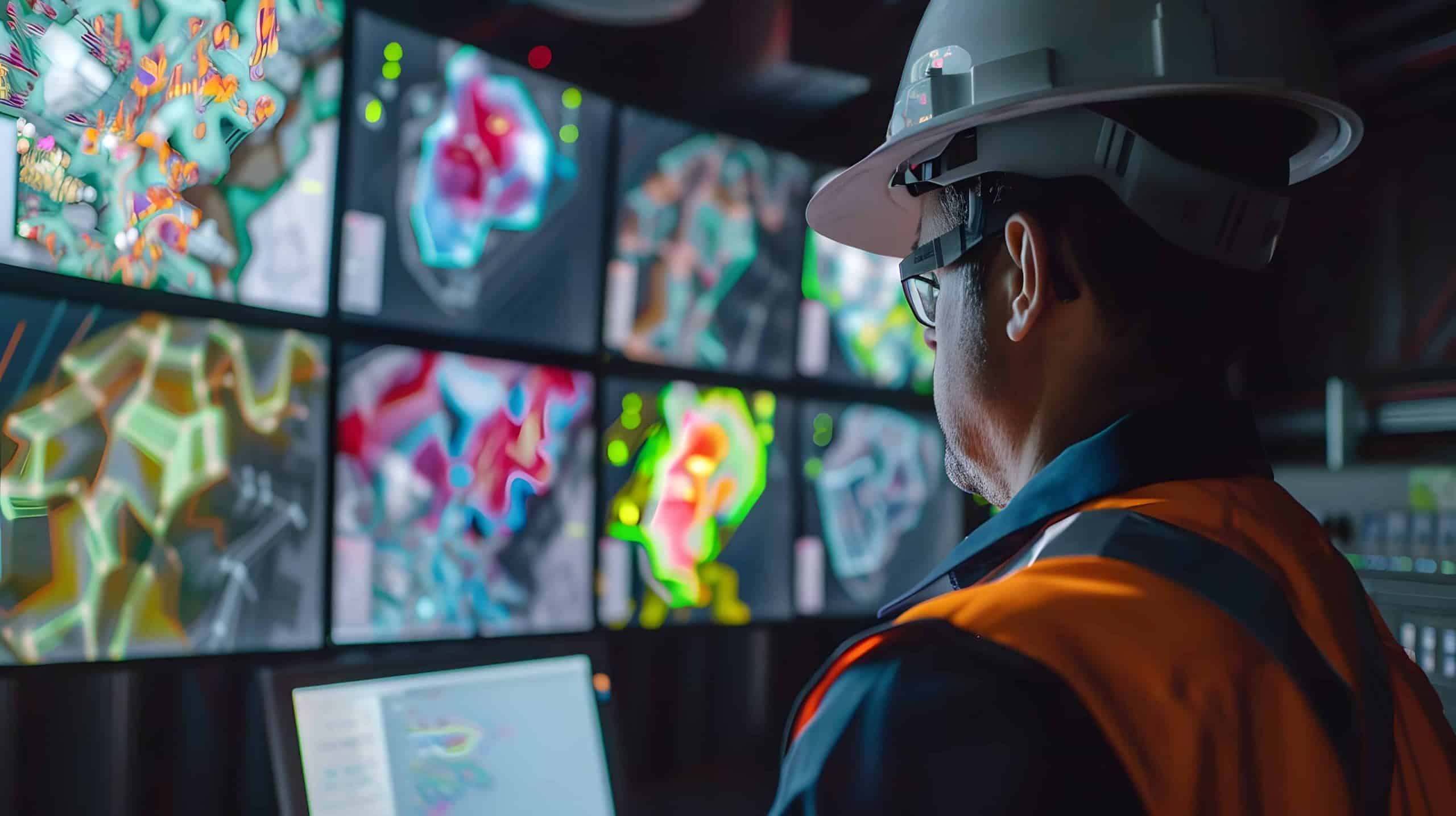
Seismic acquisition is a fundamental part of geothermal development. It helps engineers and geologists understand what lies beneath the Earth’s surface, offering a detailed picture of underground structures. This information is essential for identifying suitable locations for geothermal wells and for planning how a system will operate over its lifetime.
While widely used in oil and gas, seismic acquisition is equally valuable for geothermal applications, particularly in projects targeting deep reservoirs where understanding the geology is key to minimising risk and improving performance.
Understanding the Basics
At its core, seismic acquisition involves sending controlled sound waves into the ground. These acoustic waves travel through different layers of rock and are reflected or refracted depending on the properties of the subsurface materials. Sensors placed on the surface then record the returning signals. These recordings are used to construct a detailed image of underground structures. This image helps identify geological features that may indicate a viable geothermal resource, such as porous rock formations containing hot water or brine. The data also highlights any geological faults or hazards that could affect drilling or system design.
How the Process Works
The process begins with the selection of an energy source. This might be a vibroseis truck that presses a vibrating plate into the ground or, in some cases, a small controlled charge placed in shallow boreholes. These sources generate low-frequency waves that can penetrate deep into the Earth.
Sensors, known as geophones or wireless nodes, are positioned across the survey area. As the waves travel through the subsurface, they are reflected or bent by different geological layers. These changes are picked up by the sensors and recorded for processing. Once the survey is complete, the raw data is cleaned and processed using specialist software. Corrections are made to account for wave travel time, and the data is compiled into a seismic section or 3D volume. This model can then be interpreted by geologists to assess site suitability and inform project design.
Applications in Geothermal Development
Seismic acquisition is most commonly used during the feasibility stage of a geothermal project. It helps developers answer critical questions such as:
- Is there a suitable formation for a geothermal reservoir?
- What is the expected depth and temperature of the target zone?
- Are there any faults or geological features that may impact drilling?
Star Energy integrates seismic acquisition into the early-stage assessment of all geothermal sites. The data supports decisions on well locations, drilling strategies, and reservoir management.
Types of Seismic Surveys
The type of seismic survey selected depends on the scale of the project and the level of detail required:
2D Seismic
A single line of sensors and source points creates a vertical cross-section of the subsurface. This is useful for early-stage exploration or small-scale assessments.
3D Seismic
A grid of sensors and sources allows the creation of a three-dimensional model. This provides much greater resolution and is used in more advanced projects where precision is required.
Passive Seismic
Instead of generating waves, passive seismic listens for natural seismic activity. This can help identify deep faults or ongoing subsurface changes over time.
Real-World Use Case: Salisbury NHS Foundation Trust
Star Energy recently conducted seismic acquisition as part of the feasibility study for a geothermal heating solution at Salisbury NHS Foundation Trust. The project combined the collection of new seismic data with the reprocessing of over 700 km of legacy datasets from the past 40 years. This work helped build a detailed subsurface model of the proposed well site. It confirmed the presence of a viable geothermal resource and supported early discussions with the local planning authority and the Environment Agency. As a result, the project moved forward with greater confidence and a clearer technical basis.
Reducing Uncertainty and Risk
Drilling a deep geothermal well is a major investment. Seismic acquisition helps reduce the risk of failure by ensuring that drilling targets are chosen based on solid evidence. This improves the likelihood of successful well completion and long-term system performance. By understanding the geology in advance, developers can also plan safer drilling programmes and avoid unexpected challenges, such as unstable formations or gas pockets.
Making Use of Legacy Data
The UK has a rich archive of seismic data collected during decades of onshore oil and gas exploration. At Star Energy, we take full advantage of this legacy data by applying modern processing techniques to extract new insights. In many cases, reprocessed legacy data provides sufficient information to assess geothermal potential, particularly when supported by additional desktop studies or geophysical modelling. This approach reduces the need for new field surveys and supports more sustainable development practices.
Minimising Environmental Impact
Although seismic acquisition is a powerful tool, it must be carried out with care. Star Energy places a strong emphasis on engaging local stakeholders and minimising disruption during survey operations.
Where possible, we use vibroseis trucks and wireless sensors, avoiding the need for invasive drilling or cabling. Surveys are completed within a short timeframe, with full restoration of the site once work is finished. All operations comply with relevant regulations and environmental guidance.
A Key Step in Feasibility and Design
Seismic acquisition is a cornerstone of modern geothermal project development. It supports accurate modelling, better-informed decisions, and more efficient use of capital. When used correctly, it enables the design of reliable geothermal systems that deliver consistent, low-carbon heat over decades.
At Star Energy, our teams bring decades of experience in both new data acquisition and the interpretation of legacy seismic data. This ensures that every geothermal project is underpinned by robust, site-specific geological insight.